This game is a modern version of Twister that adds physical computing components and the two players use their fingers as the "game pieces".
(some images are slideshows)
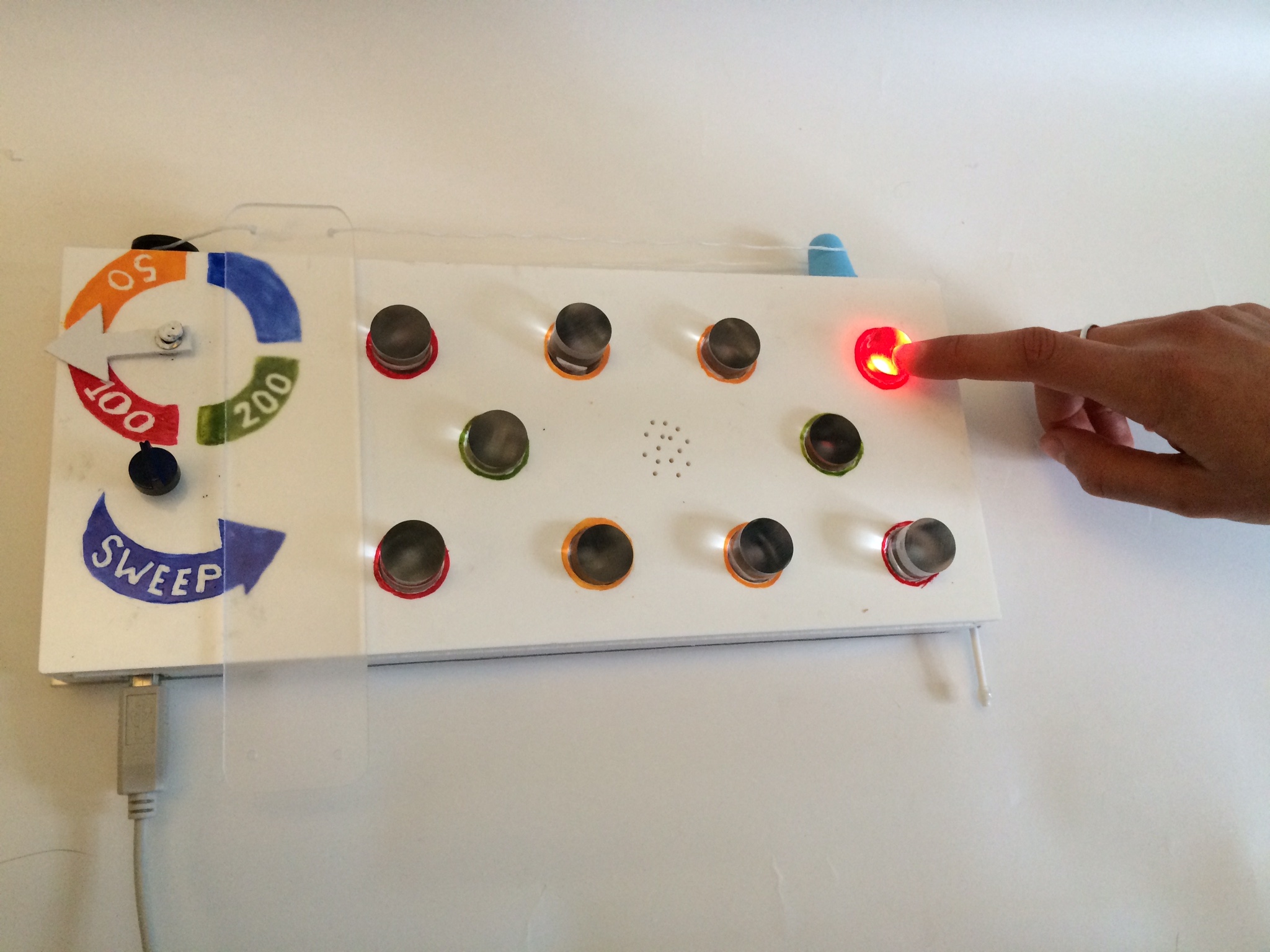
Players take turn spinning the wheel and move their “game pieces” (fingers) to the corresponding pods, which light up when pressed. If the player lifts their finger then the light turns off it results in losing points.
You know the game is on (because the lights initially are off) because when it is turned on a tune plays.
Spinning the wheel you can land on four possibilities
Yellow= 50 points
Red= 100 points
Green= 200 points
Blue= Sweeper arm! One of the wheel possibilities is the “arm” which gives the player the option to sabotage (or not depending on their own game piece position) by sweeping the arm across the board hoping to knock off a finger or two.
When all pods are taken then player with most points win.
HARDWARE:
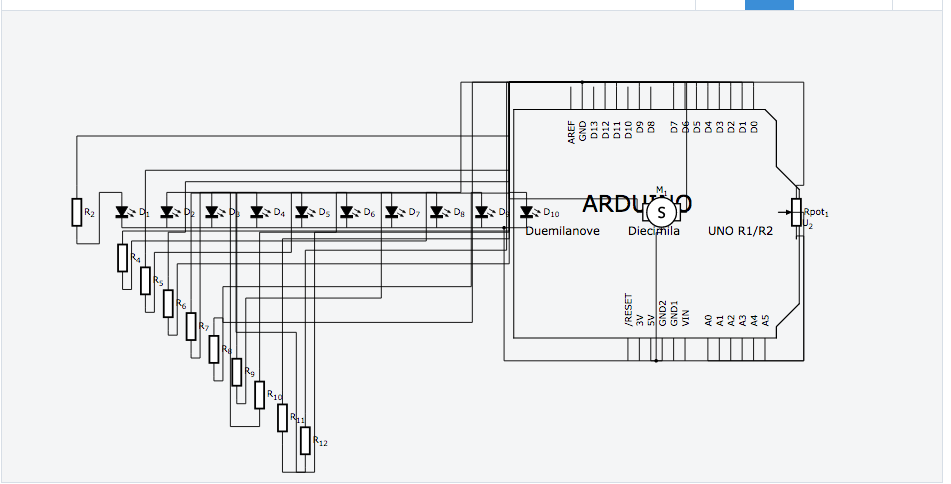
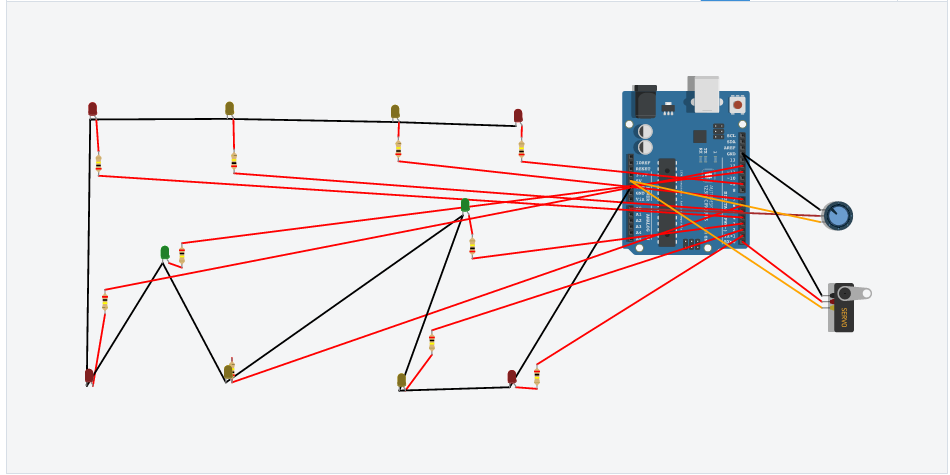
This game is made up of ten individual LEDS, a servo motor, a speaker and a potentiometer.
It is enclosed in a white acrylic case with a clear bottom.
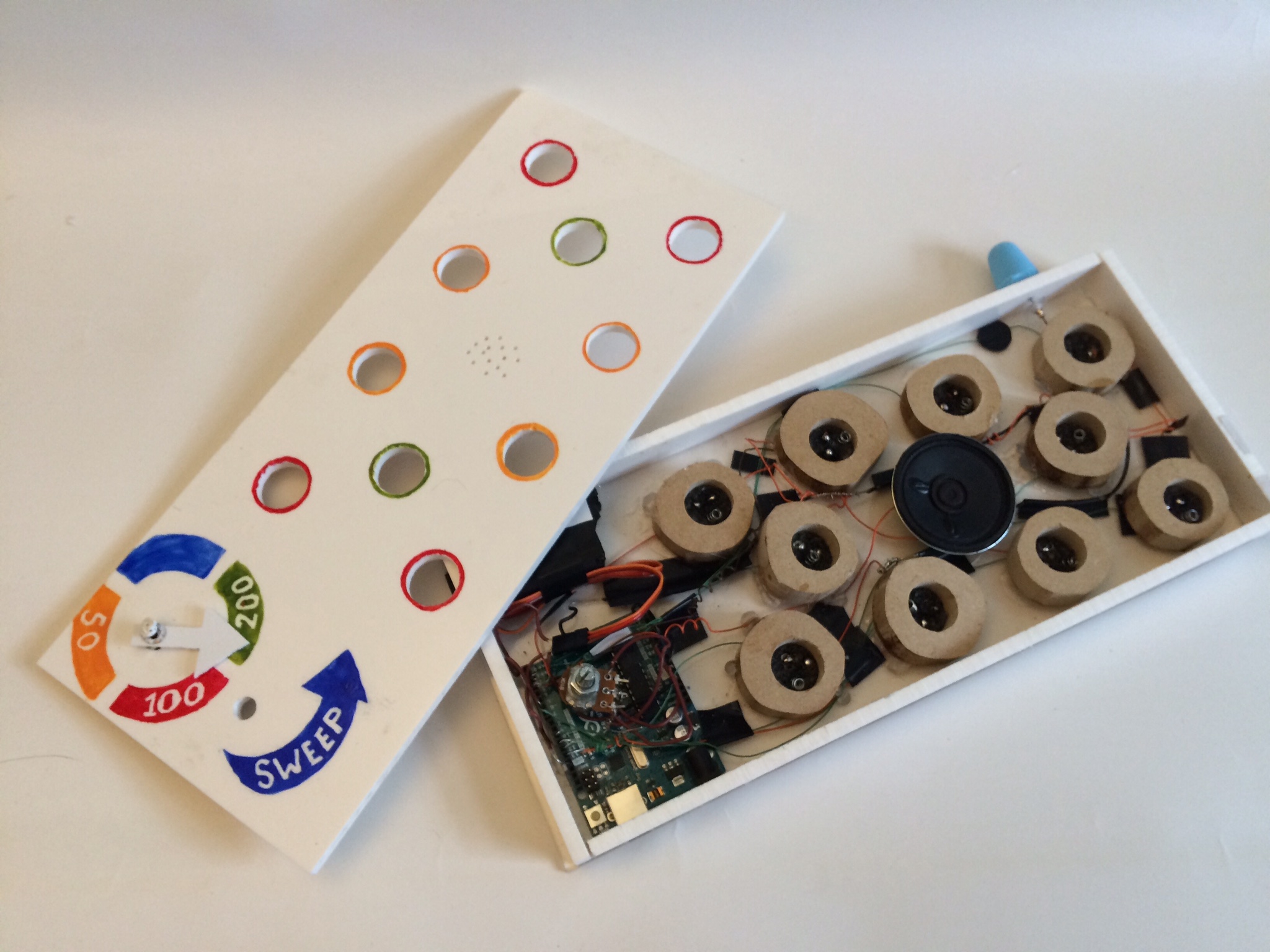


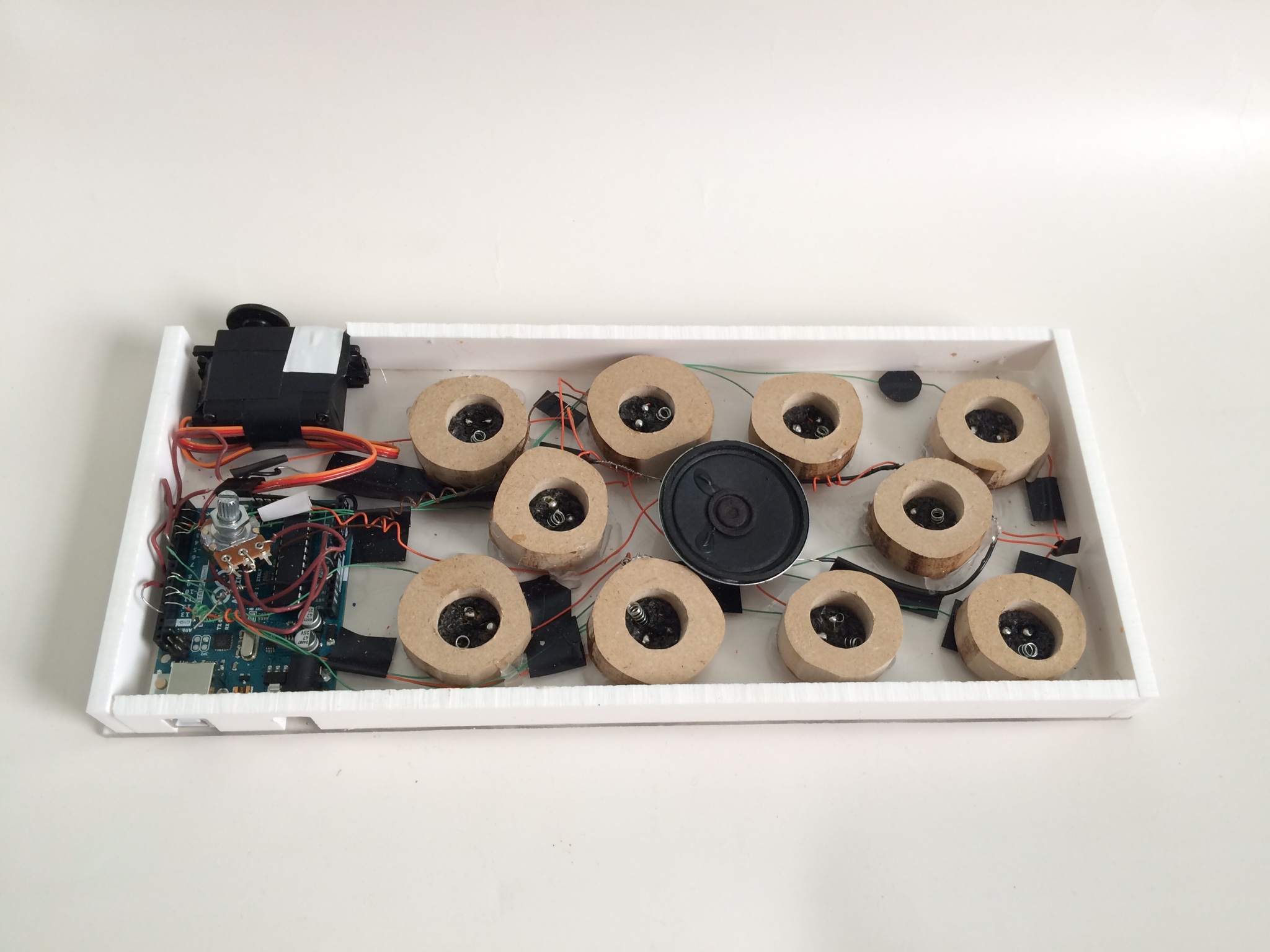
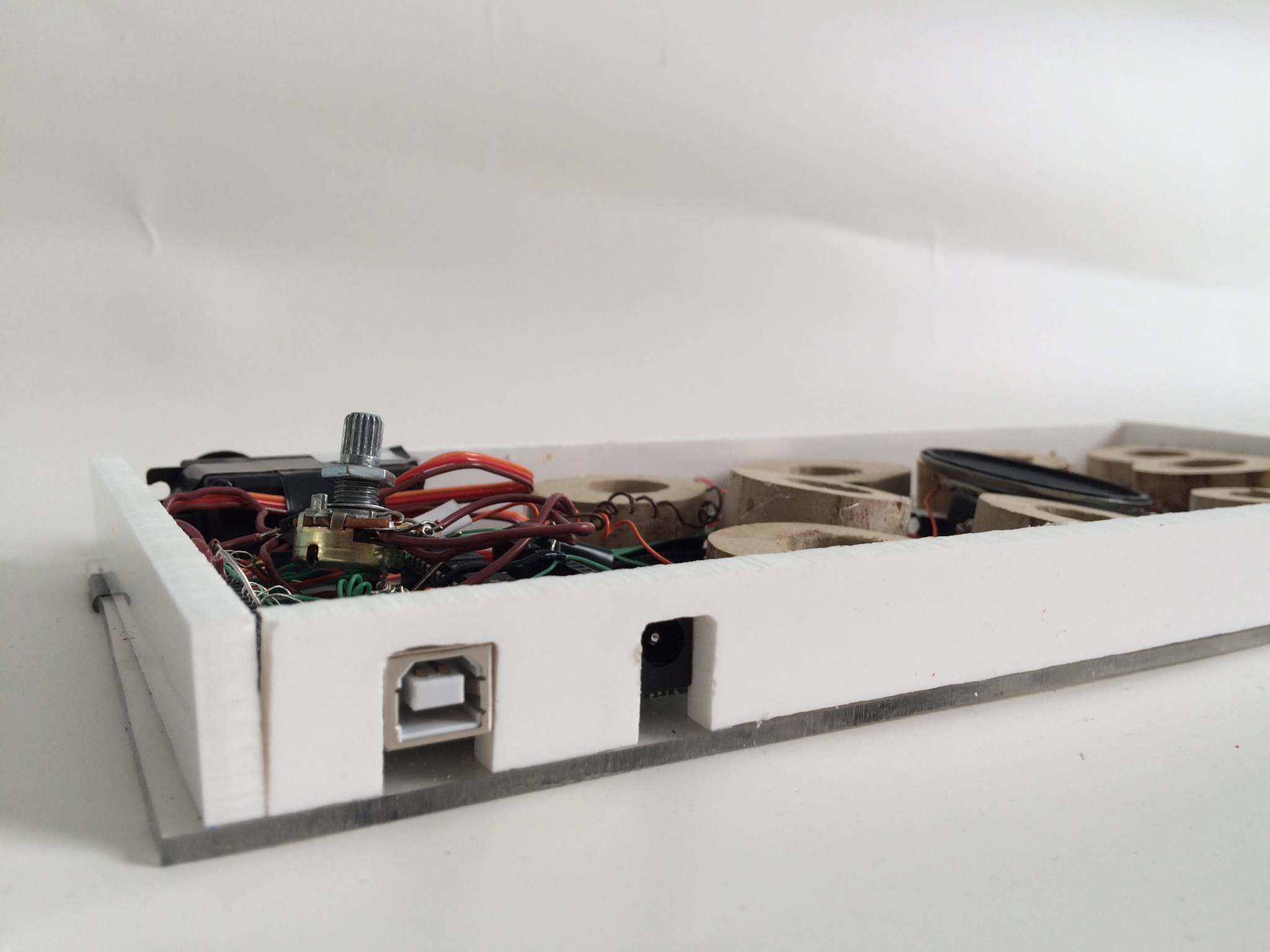
The underside looking through the bottom and the inside
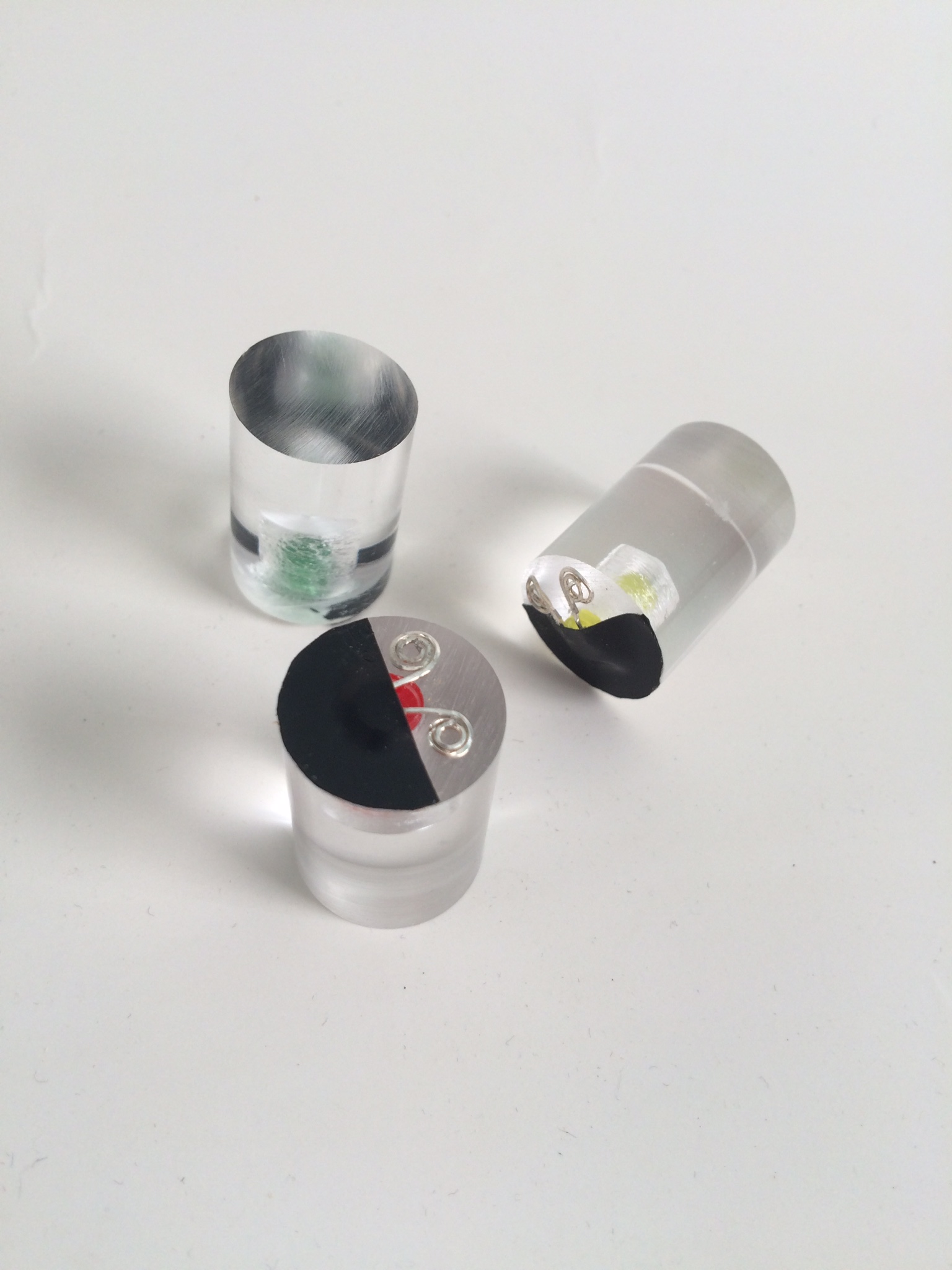 The LED pods, I chose to coil the wire as such to maximize surface area retaining the flat properties
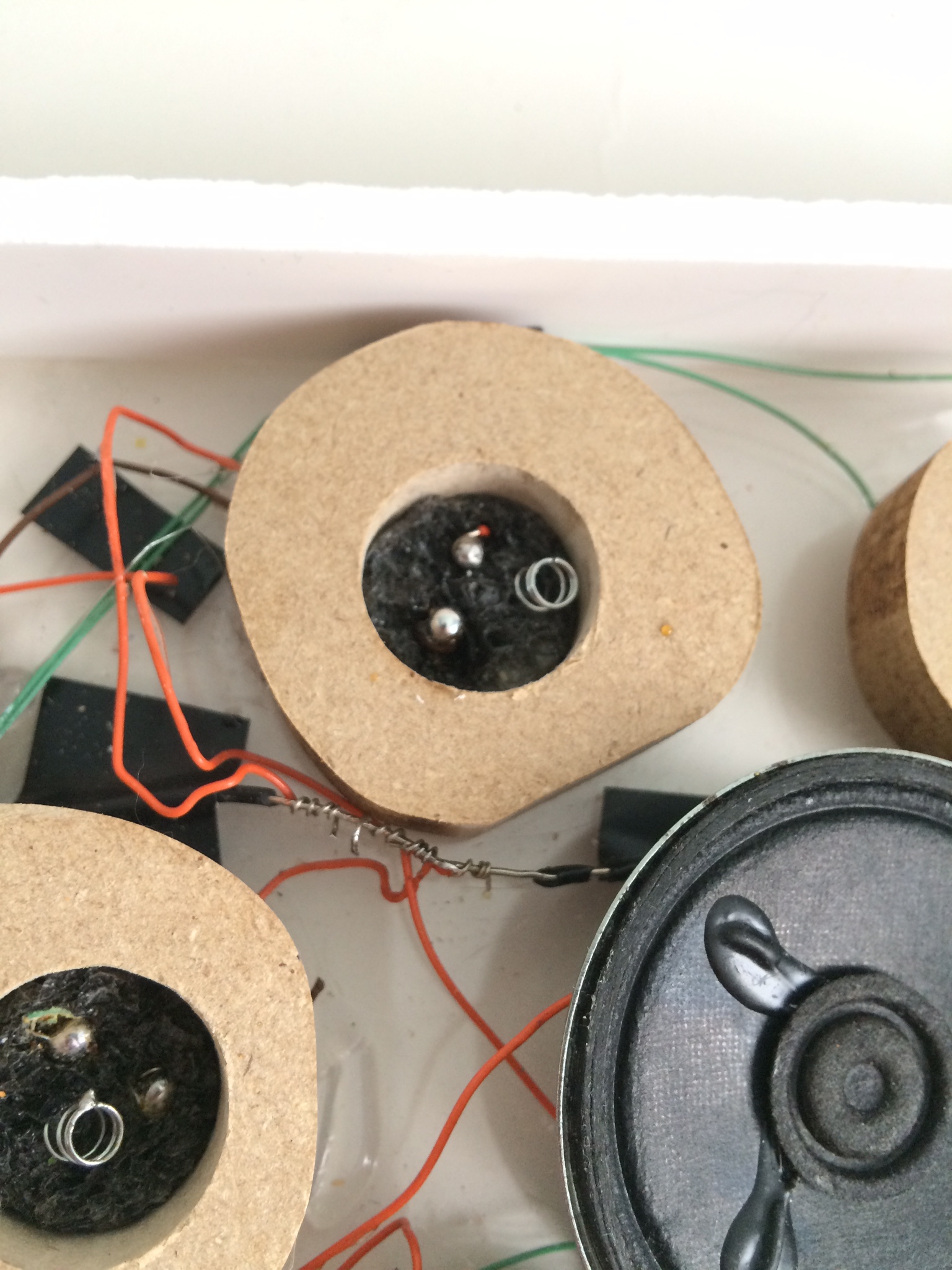
The pod holder made up of black foam, a spring, a wire connected to ground and a resistor (connecting to a pin). I added solder to make the wires protrude more.
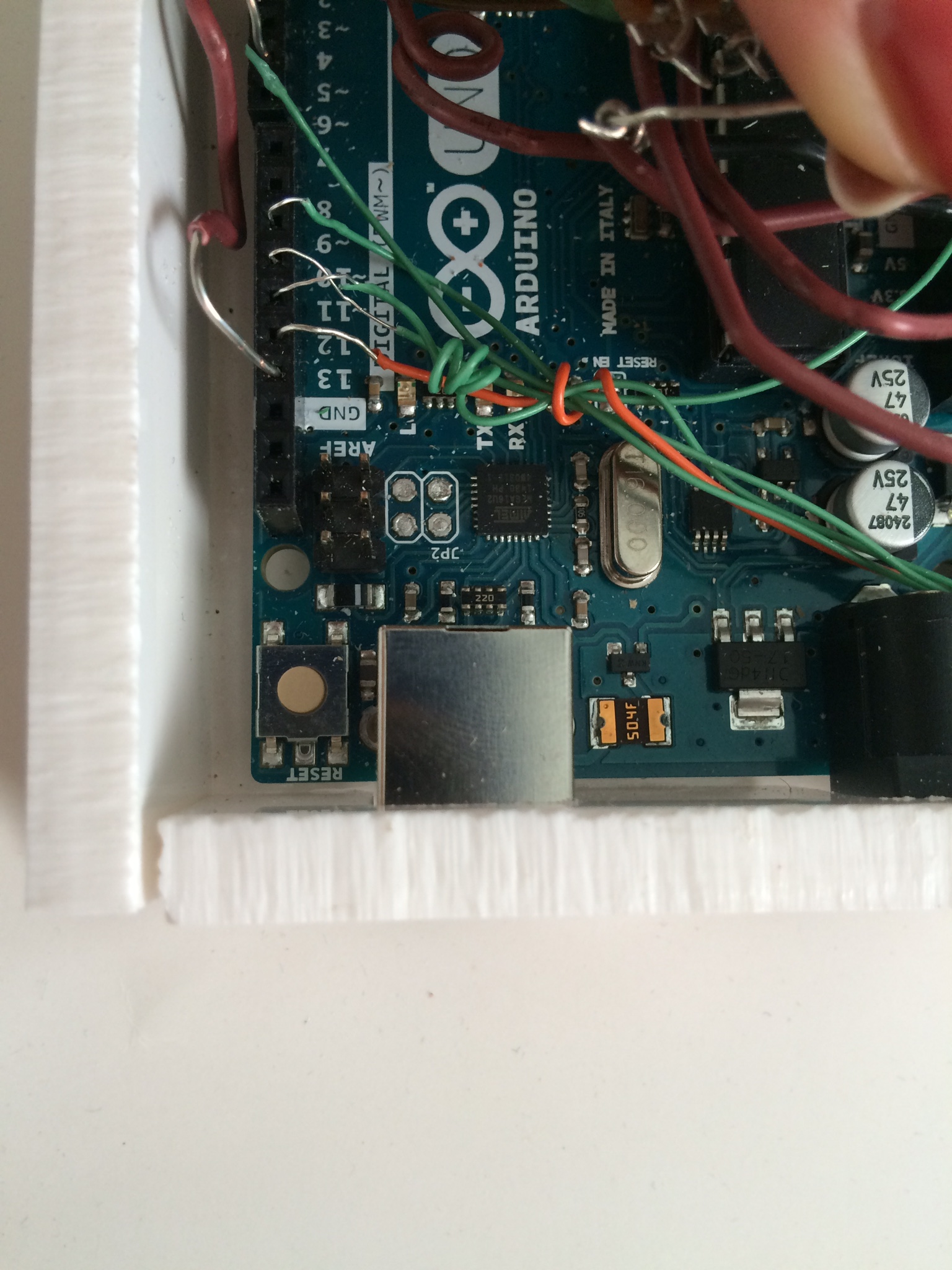
Wire management. I used the thin wires which tend to pop out of the pins easier but I used their flexible nature to organize the surrounding wires since order of the LEDs was not important I could cross wires.
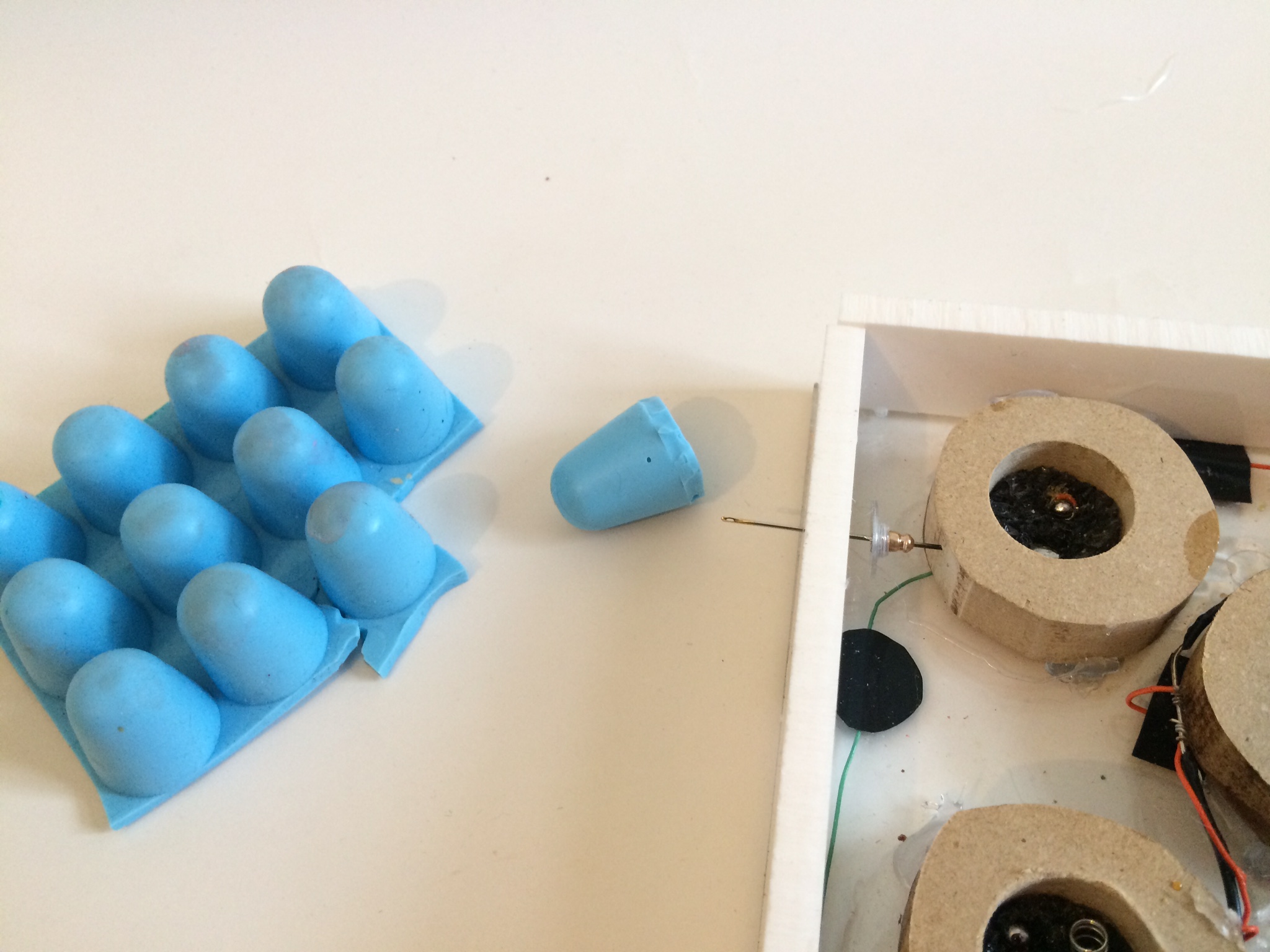
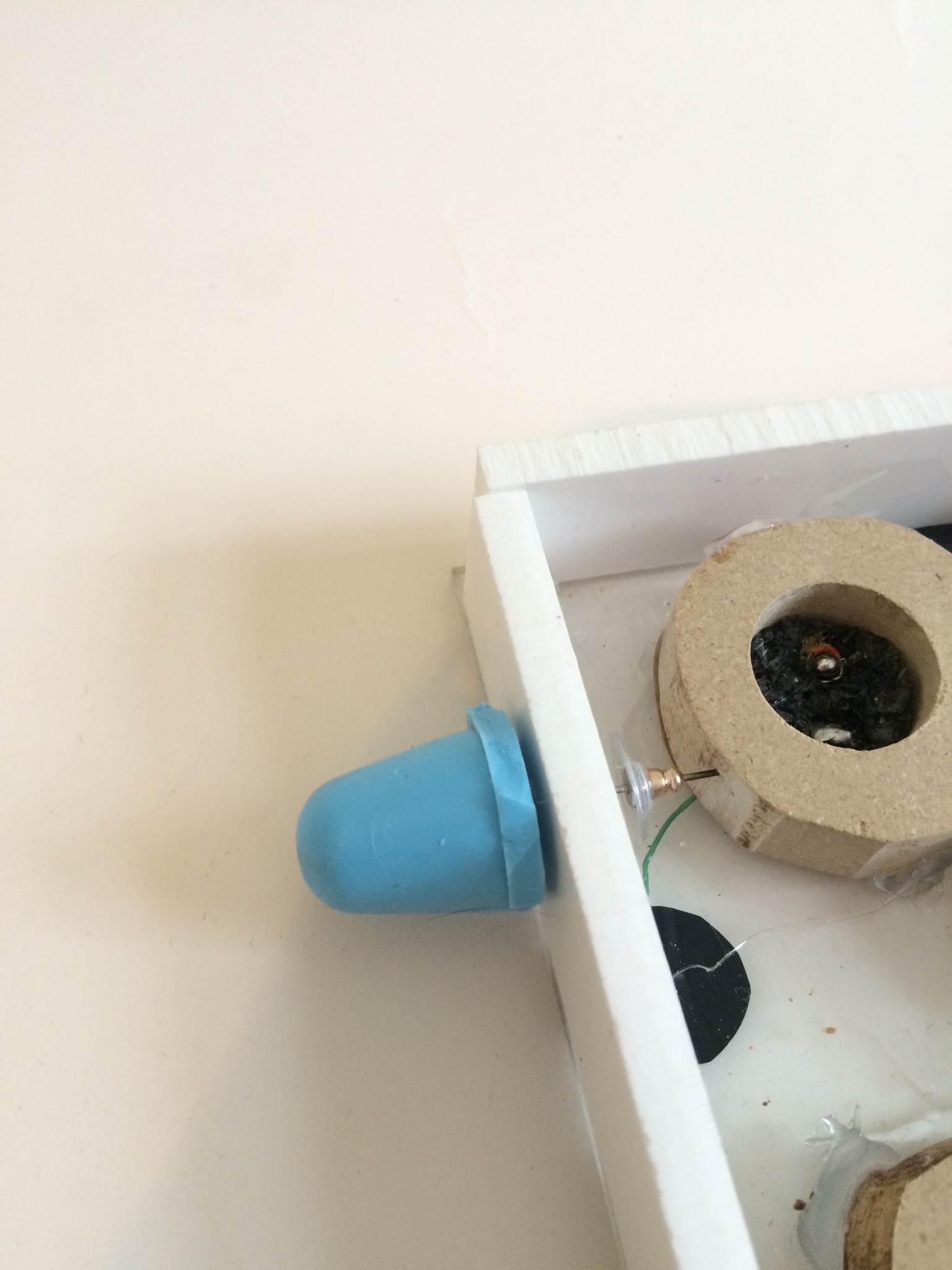
The servo arm, inspired by the "507 Mechanical Movements" book I used a belt to make the arm slide across the game, one side of the belt is attached at the servo and the other side is a rotating end, it is a blue silicone nub (to create friction) attached to a simple sewing needle and earring backing to keep it in but allow it to rotate
CODE AND SOFTWARE
The LEDs are each individually wired, this is because originally I had intended for the code to recognize when all ten pods were pressed and play the tune of "end of game"
Inside each pod holder there is a resistor.
The negative wire (orange) wraps around the ground wire which goes around the board. The positive is the green wire in the photo which is connected to the pin and the resistor.
The code is actually quite simple because it did not need to be intricate, the player is what creates the changes in the variables (on/off LED and potentiometer)
It combines codes from lighting LEDs, Servo Knob and Melody Tune
GITHUB CODE
PROCESS
Knowing that I would have three individual components I began building with baby steps on the breadboard and the code.
1. I strung 10 LEDs to individual digital pins to see if that many works
2. After I unplugged the LEDs and I got the servo to respond to the pot.
3. I added one LED to the servo with the pot, the servo wasn’t smooth but it still worked
4. I re-attached the string of LEDs to the servo and now the servo only responded sporadically.
I learned that because I was building my code by adding to it as I added components, I was affecting the order the components would output.
The servo only responded between the 1st and 10th LED when the blinking sequence was done and the code looped.
I changed the code I was creating by replacing the “blink by delay HIGH LOW” of the LED to a “blink without delay” that way the code for the LED did not interfere with the servo code.
http://fritzing.org/projects/arduino-uno-r3-servo-control
https://arduino.cc/en/Tutorial/BlinkWithoutDelay
When I assembled it on the game board it stopped working so I simplified the LED code to just “HIGH”

BUILDING AND ASSEMBLY
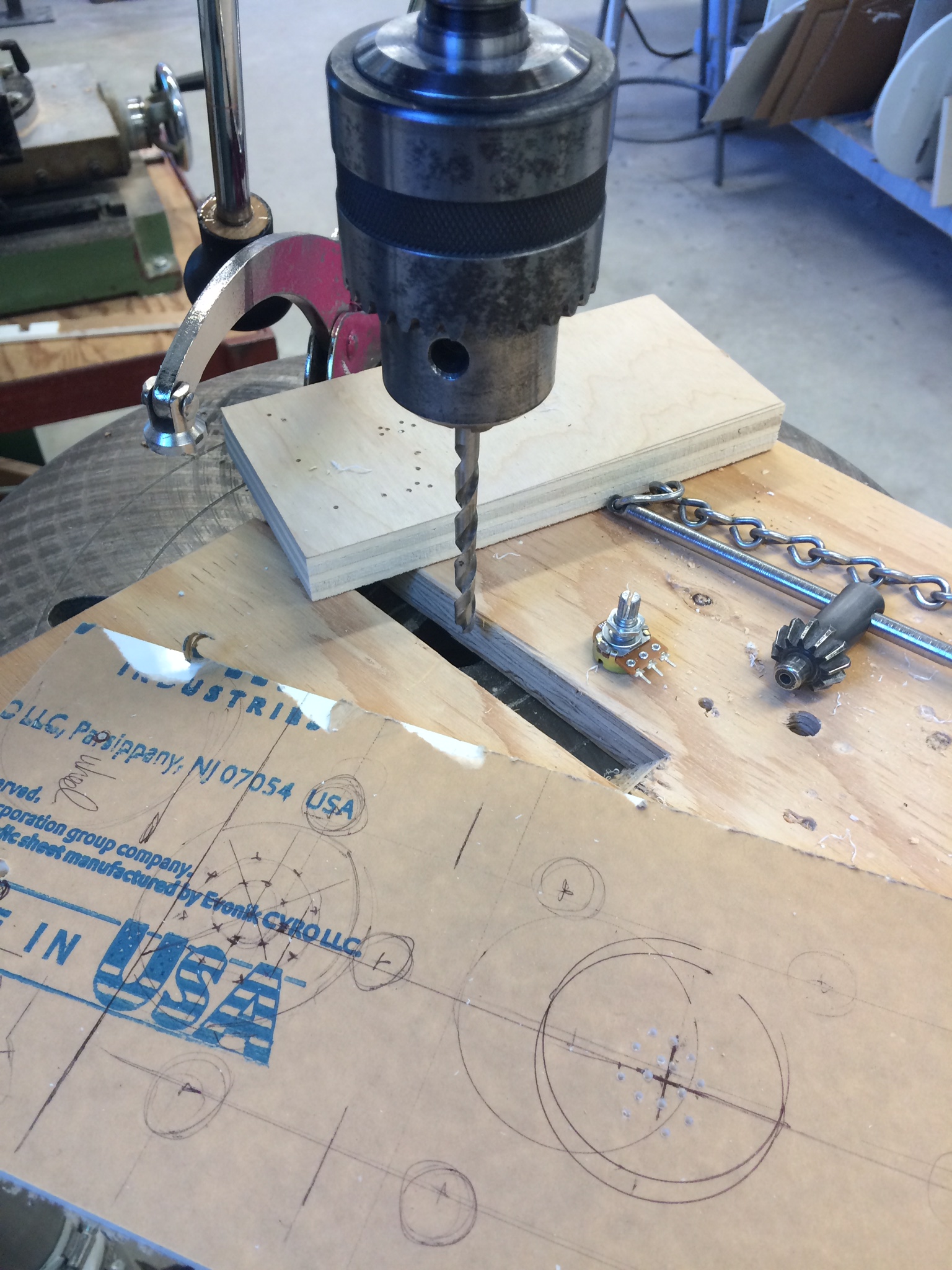
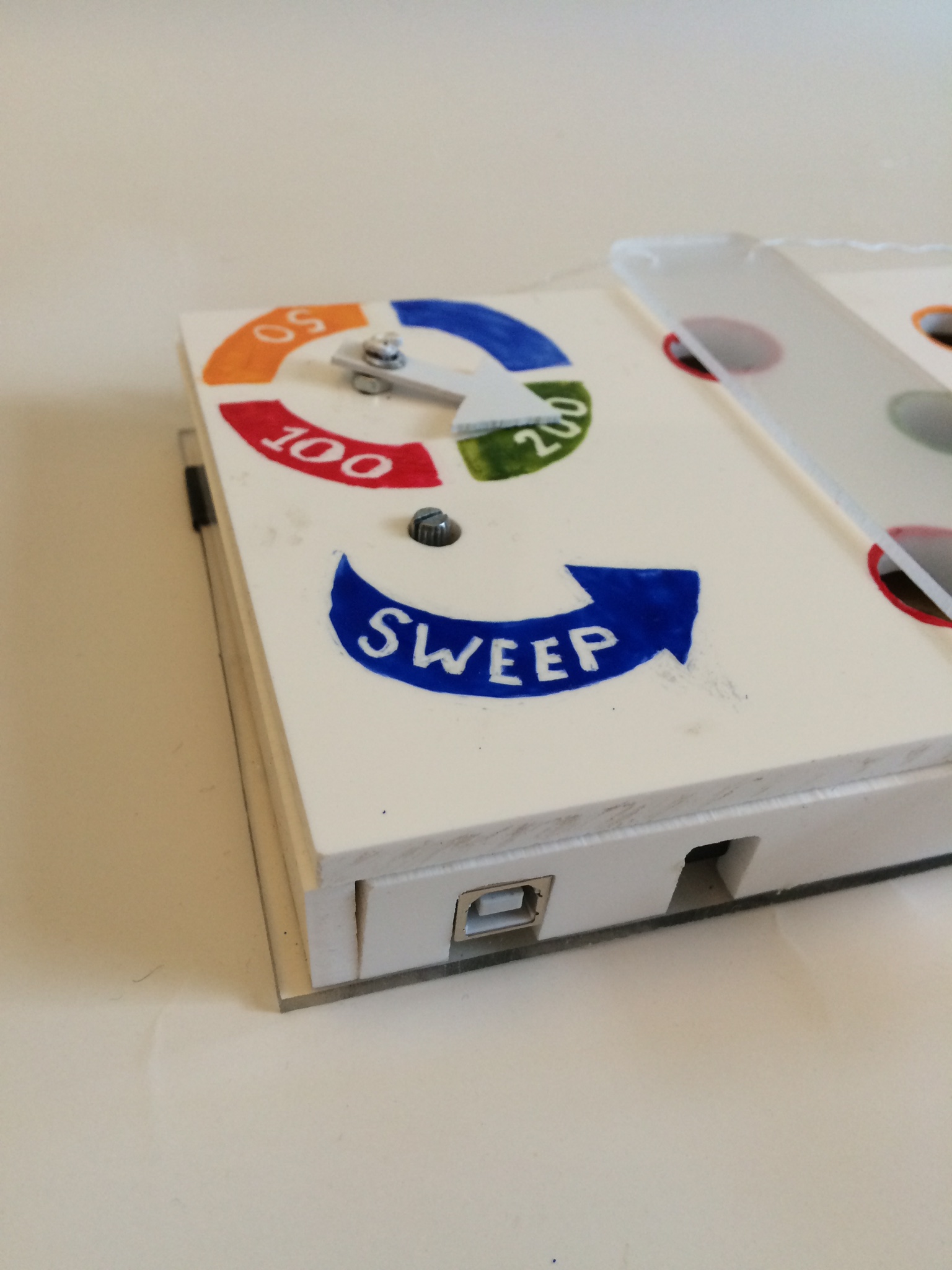
All the holes and shapes are custom fitting to the components such as Arduino plug, potentiometer and servo arms.
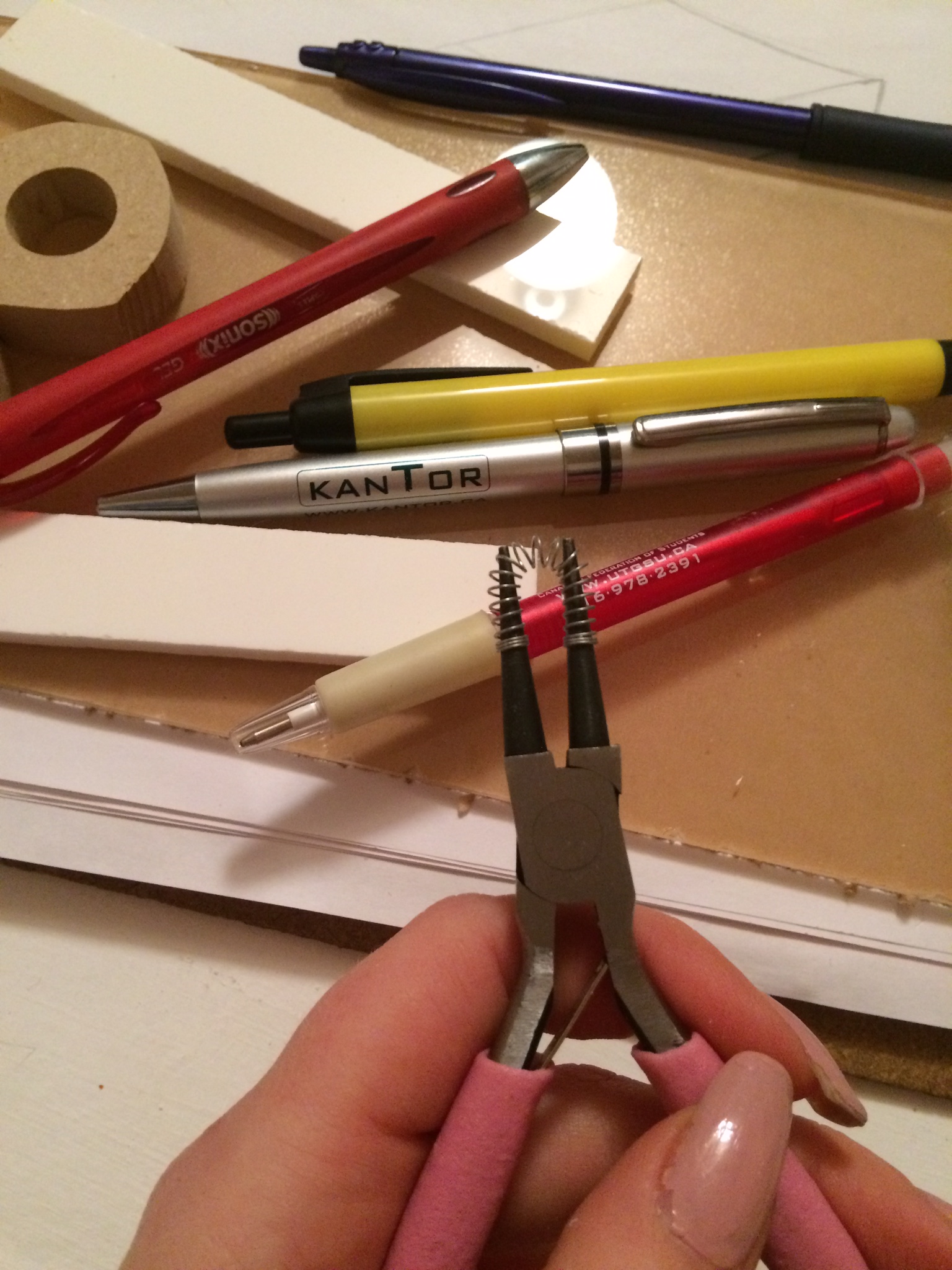 The springs come from ordinary ballpoint pens, I learned from the metal shop you cannot make your own spring by coiling wire because it is not the right type of steel
  Originally I had wanted to make the connection by using aluminum foil inside the wood component but the fit was too tight and it didn't slide so I came up with the coiled LED legs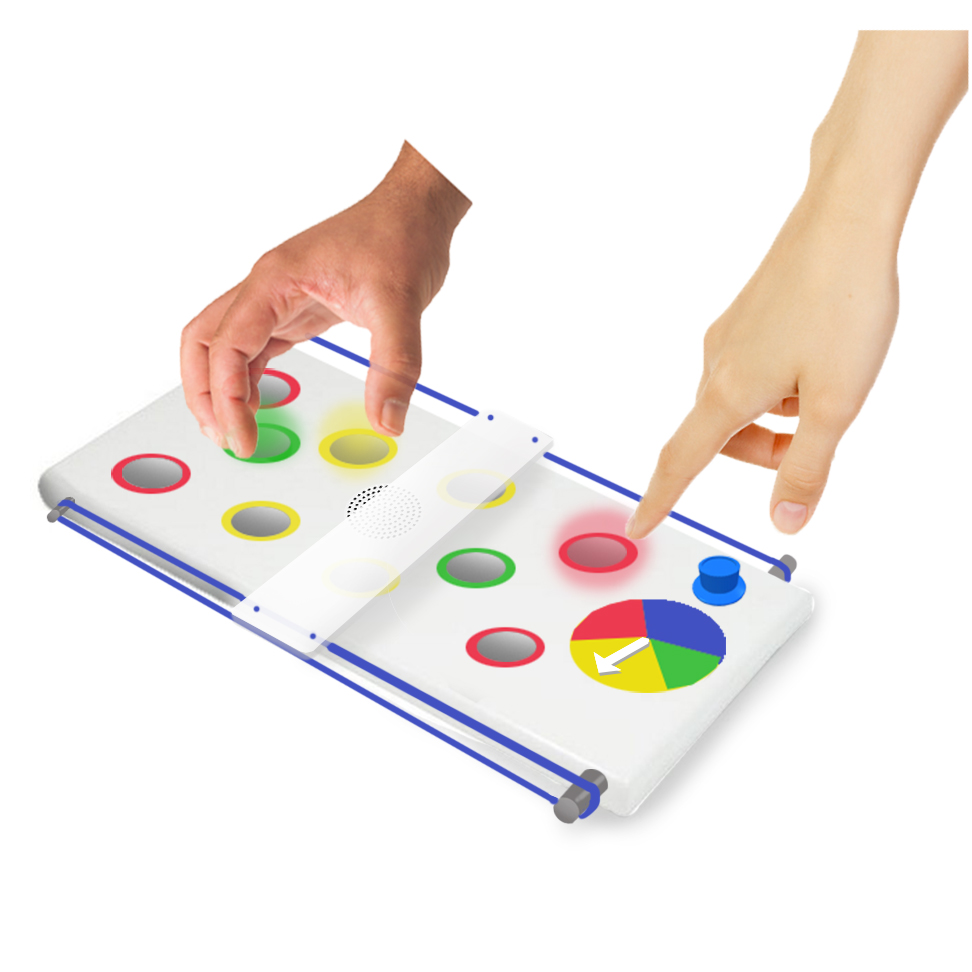
Original concept.
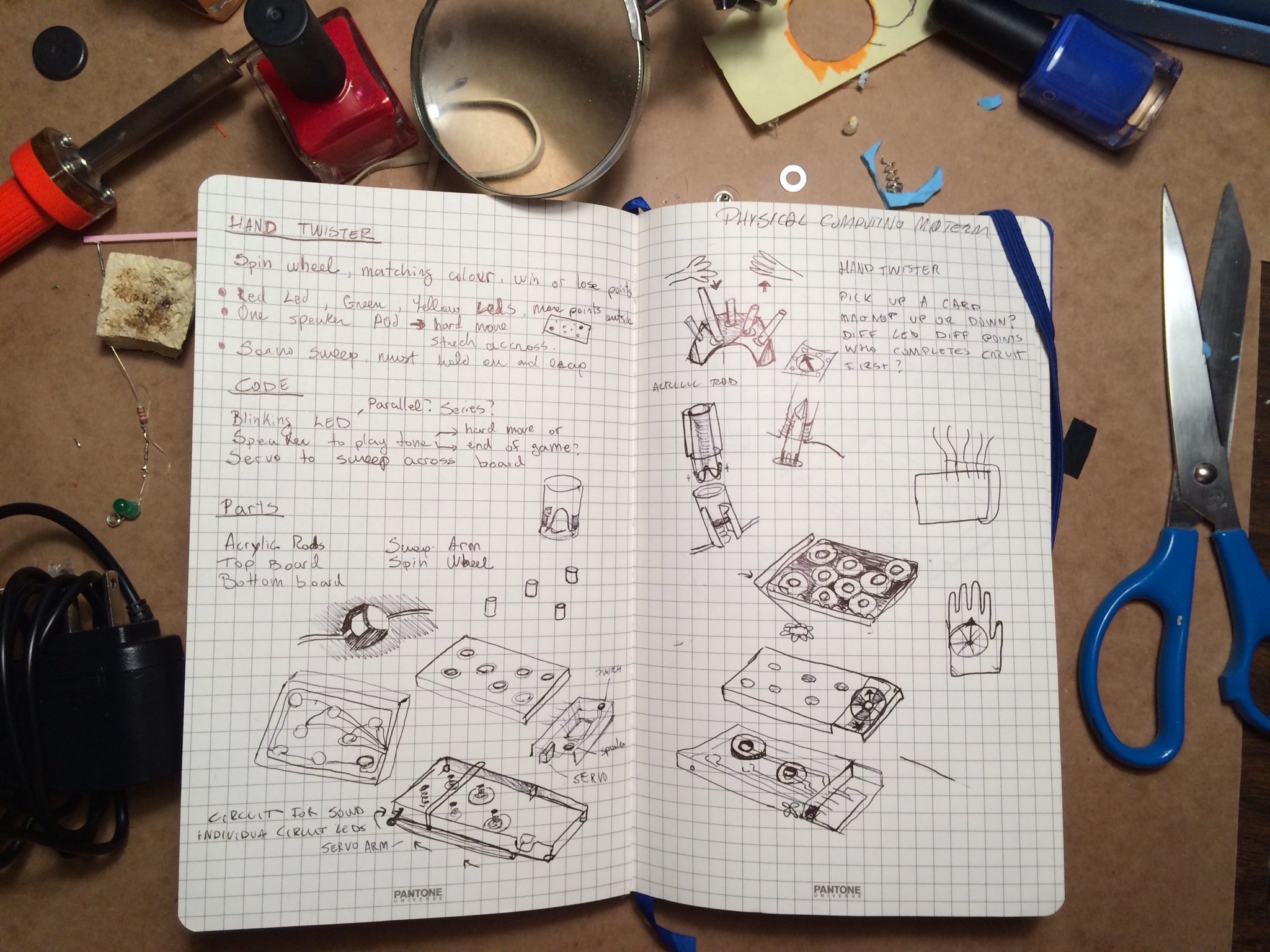
I think because I had planned it so extensively on paper how it all fits together the actual physical part looks exactly like my initial sketches. The coding was unpredictable and that had to change often and adapt
NEXT STEP
Create a sweeper arm that does not get stuck on the pods (thats a measurement issue) and I was not able to put a rod that rotates across the game on the inside, in order to support the sweeper arm. This was because the inside of the game was not empty but it had wood pod holders not allowing any space for a rod to go across.
I would like to further develop the coding to do what I had originally planned which is to have the speaker play a tune once all ten LED are pressed.
To improve the game I could add a score keeper, this could involve the game recognizing the different players by body variables or gloves and corresponding them to points assigned to each pod.
Additional Images